As beauty and personal care brands move toward more sustainable packaging, one question is becoming increasingly important for product developers, packaging buyers, and brand owners:
Are deodorant stick containers recyclable?
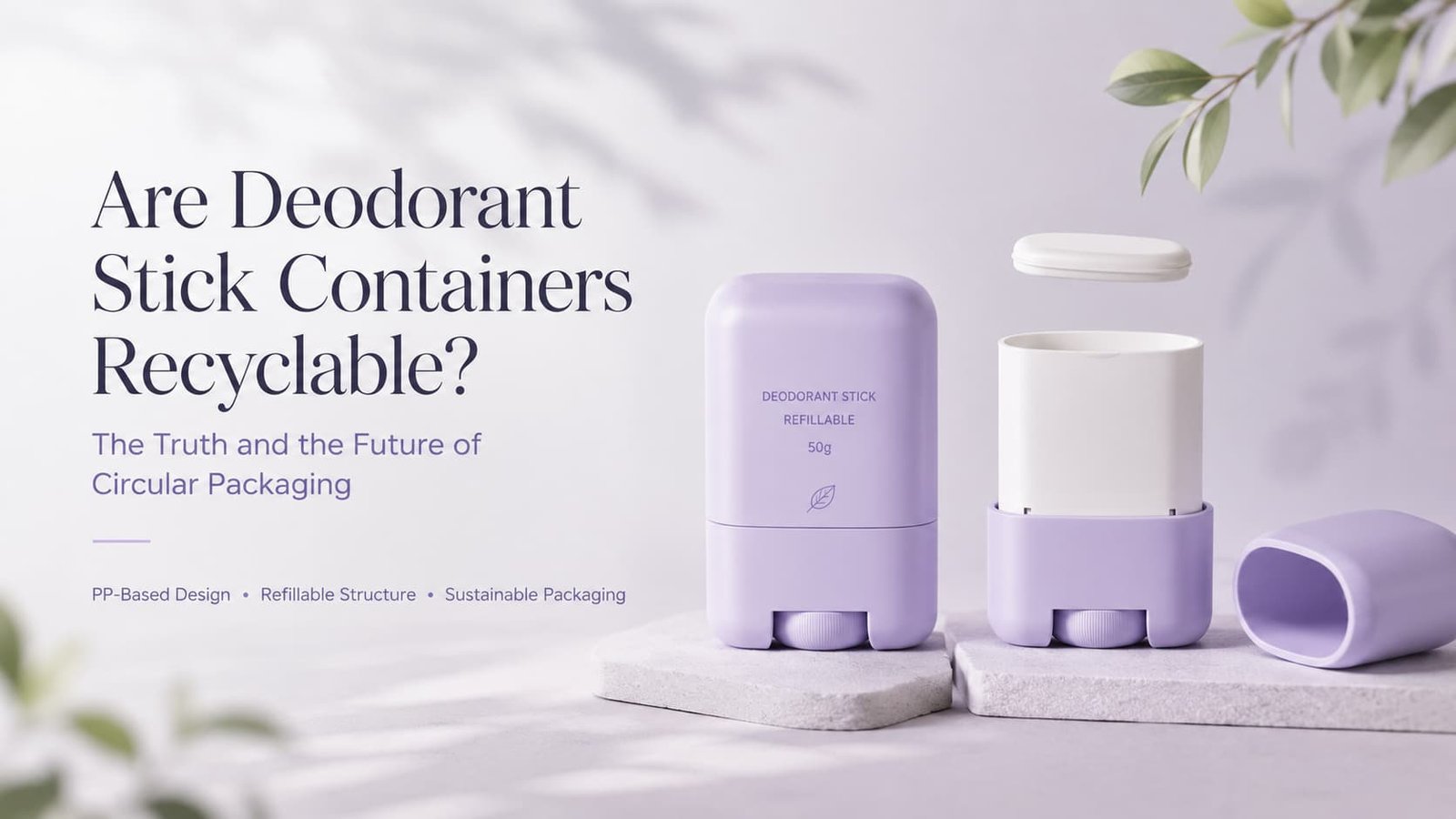
The answer depends on the material, structure, decoration, local recycling system, and whether the container is designed for single use or refillable use. Traditional deodorant stick containers are often difficult to recycle because they may contain mixed plastic materials, complex internal mechanisms, and residual product contamination. However, modern deodorant stick packaging is changing quickly through PP material design, refillable structures, PCR options, and more recycling-conscious engineering.
In this article, we explain why many traditional deodorant containers are challenging to recycle, how modern stick packaging can improve recyclability, and what brands should consider when choosing a sustainable deodorant stick container.
Why Recyclability Matters in Deodorant Stick Packaging
For cosmetic brands and personal care manufacturers, recyclability is no longer just a marketing claim. It has become an important part of product development, packaging procurement, and brand positioning.
Consumers are paying more attention to packaging waste. Retailers are asking brands to reduce single-use plastic. Many markets are encouraging packaging designs that are easier to sort, reuse, recycle, or refill.
For deodorant, antiperspirant, solid perfume, sunscreen stick, and body balm products, the packaging must also remain functional. It needs to protect the formula, support smooth application, provide a good user experience, and still look attractive on the shelf.
This is why sustainable deodorant stick packaging requires a balance between:
- Material selection
- Mechanical performance
- Product protection
- Refillability
- Recyclability
- Brand customization
- Cost and production feasibility
A recyclable deodorant stick container is not simply a plastic tube. It is a complete packaging system that must be designed carefully from the beginning.
Why Traditional Deodorant Stick Containers Are Difficult to Recycle
Traditional deodorant stick containers may look simple from the outside, but they often contain several internal components. These parts are designed to make the stick twist up smoothly, hold the formula in place, and protect the product during use.
The problem is that these components are not always made from the same material.
1. Mixed Plastic Materials
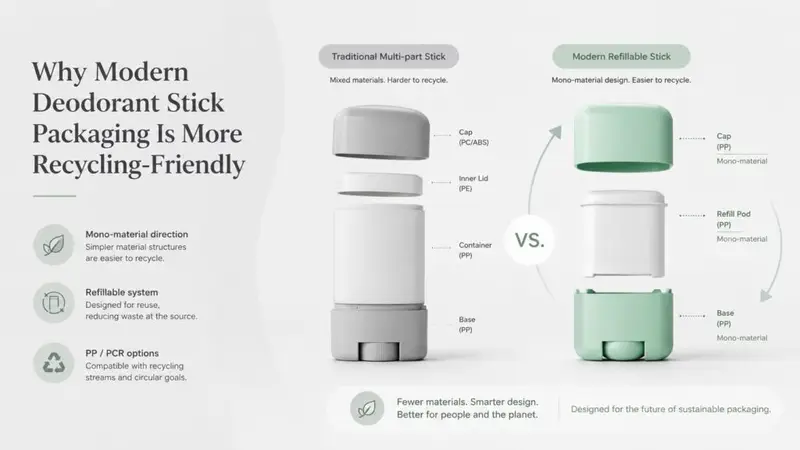
Many traditional deodorant stick containers use different plastic resins for different parts of the package. For example, the outer cap, shell, internal screw, elevator, and bottom dial may be made from different plastic materials depending on the design and performance requirements.
This can create recycling challenges because recycling systems usually prefer packaging made from one main material type. When several materials are combined into a small mechanical package, it may be difficult for recycling facilities to separate them efficiently.
As a result, mixed-material deodorant stick containers may have lower recycling potential than simpler mono-material packaging designs.
2. Complex Internal Mechanisms
A deodorant stick container usually includes an internal elevator and twist-up mechanism. These parts allow the solid formula to move upward when the consumer turns the base.
Although this mechanism is useful for product application, it can make recycling more complicated. Small internal components may be hard to remove, and consumers are unlikely to disassemble the package before disposal.
If the internal parts are made from different materials, the whole container may be treated as a mixed-material item rather than a clean single-material package.
3. Residual Formula Contamination
Deodorant, antiperspirant, balm, and solid perfume formulas often contain waxes, oils, fragrances, or active ingredients. After the product is finished, some formula may remain inside the container, especially below the elevator or around the internal mechanism.
This residue can reduce the quality of recycled material and may make the package less attractive for recycling facilities.
For better recycling potential, brands should consider container designs that reduce trapped residue and make the refill pod or inner component easier to empty.
What Makes a Deodorant Stick Container More Recyclable?
A deodorant stick container can become more recycling-friendly when it is designed with material simplicity, easy sorting, and reduced contamination in mind.
Several design directions can help improve recyclability.
1. PP-Based Material Design
Polypropylene, commonly known as PP, is widely used in personal care packaging because it is lightweight, durable, and suitable for many injection-molded components.
For deodorant stick containers, PP can be used for parts such as:
- Outer cap
- Main body
- Base
- Dial
- Refill pod
- Product support platform
A PP-based deodorant stick container may help simplify material sorting compared with packaging made from several unrelated plastic materials. However, brands should confirm the actual material composition of each component before making recyclability claims.
2. Mono-Material Structure
Mono-material design means that the main components of a package are made from the same material family. In deodorant stick packaging, a mono-material PP structure may improve recycling potential because the cap, shell, base, and inner components can be designed from PP-based material.
A mono-material deodorant stick container may offer several advantages:
- Easier material identification
- Reduced mixed-resin contamination
- Simpler recycling communication
- Better alignment with circular packaging goals
- More consistent sustainability positioning
However, “mono-material” should be verified at the component level. If a container includes hidden metal springs, non-PP internal parts, labels, adhesives, or mixed decoration materials, these may affect recycling performance.
For this reason, beauty brands should ask suppliers for a clear material breakdown before confirming packaging.
3. Refillable Structure
Refillable deodorant stick containers offer another path toward more sustainable packaging.
Instead of discarding the entire package after one use, the consumer keeps the reusable outer case and replaces only the inner refill pod. This can reduce the amount of packaging material used over multiple product cycles.
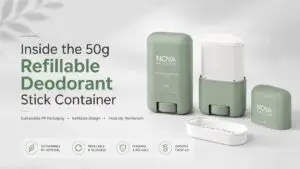
A refillable deodorant stick container usually includes:
- Reusable outer case
- Replaceable refill pod
- Twist-up base or operating mechanism
- Cap for product protection
This structure can support a more circular product model because the durable outer case remains in use while the refill pod is replaced.
For brands, refillable packaging can also support repeat purchases, product line expansion, and stronger sustainable brand positioning.
4. PCR PP Options
Post-consumer recycled plastic, or PCR, is another important option for sustainable deodorant stick packaging.
PCR PP can help reduce the use of virgin plastic in selected packaging components. Depending on product design, color requirements, mechanical performance, and production feasibility, brands may consider adding a certain percentage of PCR PP into the container.
Before choosing PCR material, brands should evaluate:
- Target PCR percentage
- Color consistency
- Surface finish
- Mechanical strength
- Twist-up performance
- Printing and decoration compatibility
- Market and regulatory requirements
Higher PCR content may not always be suitable for every design or color. A professional packaging supplier should help test the right balance between sustainability, appearance, and function.
Recyclable vs. Refillable: What Is the Difference?
Although recyclable and refillable packaging are often discussed together, they are not the same.
| Packaging Concept | Meaning | Main Benefit |
|---|---|---|
| Recyclable Packaging | Designed to be collected, sorted, and processed into recycled material where facilities exist | Supports material recovery |
| Refillable Packaging | Designed so consumers can replace the inner product unit and reuse the outer package | Reduces repeated use of full packaging |
| PCR Packaging | Made with post-consumer recycled plastic content | Reduces virgin plastic usage |
| Mono-Material Packaging | Made mainly from one material family | Helps simplify sorting and recycling potential |
A strong sustainable deodorant packaging strategy may combine several of these ideas. For example, a 50g refillable deodorant stick container can use a reusable outer case, replaceable PP refill pod, and PCR PP material options depending on the project requirements.
Are 100% Recyclable Deodorant Stick Containers Possible?
Technically, deodorant stick containers can be designed to improve recyclability through mono-material PP structures, simplified components, and recycling-conscious engineering.
However, brands should be careful with the phrase “100% recyclable.” Actual recyclability depends on several factors, including:
- Material composition
- Local recycling infrastructure
- Label and decoration materials
- Residual formula contamination
- Consumer disposal behavior
- Sorting and processing rules in the target market
A more accurate and professional claim may be:
- Designed for improved recyclability
- Made with PP material options
- Developed with mono-material design principles
- Refill-ready packaging structure
- PCR PP options available
- Supports sustainable packaging goals
This type of wording is safer for B2B communication and better aligned with responsible packaging claims.
Technical Checklist for Choosing a Sustainable Deodorant Stick Container
Before selecting a recyclable or refillable deodorant stick container, packaging buyers should review the following technical points.
| Checklist Item | What to Confirm |
| Material Composition | Confirm the material of the cap, body, base, dial, elevator, and refill pod |
| Mono-Material Design | Check whether all major components are made from the same material family |
| PCR Compatibility | Ask whether PCR PP can be used and what percentage is suitable |
| Refill Structure | Confirm whether the container supports replaceable refill pods |
| Twist-Up Mechanism | Test smooth rotation, stable lifting, and long-term usability |
| Formula Compatibility | Test deodorant, balm, sunscreen, or solid perfume formula before mass production |
| Residual Product Control | Evaluate whether the design helps reduce trapped formula |
| Decoration Method | Check whether labels, printing, or hot stamping affect recycling goals |
| Cap Fit and Protection | Confirm product protection, fragrance retention, and transport performance |
| Market Claims | Avoid unsupported claims and use accurate sustainability language |
This checklist helps brands avoid choosing packaging based only on appearance or marketing language.
Why 50g Refillable Deodorant Stick Containers Are a Practical Option
The 50g size is widely used for full-size deodorant and solid personal care products. It offers enough product capacity for daily use while remaining compact and easy to carry.
A 50g refillable deodorant stick container is suitable for:
- Natural deodorant
- Antiperspirant stick
- Solid perfume
- Sunscreen stick
- Body balm
- Moisturizing stick
- Skincare stick
- Private label deodorant projects
- Sustainable personal care brands
For brands developing refill systems, the 50g format provides a familiar consumer experience while allowing the outer case to be reused with compatible refill pods.
This makes it a practical option for brands that want to combine usability, sustainability, and premium product presentation.
Sustainable Customization Options for Brands
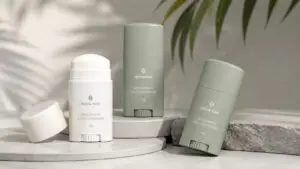
Sustainable deodorant stick packaging does not have to look plain. Brands can still create a premium appearance while using more responsible packaging structures.
Common customization options include:
- Custom color
- Matte finish
- Glossy finish
- Soft-touch effect
- Translucent color
- Silk screen printing
- Hot stamping
- Labeling
- Logo printing
- PCR PP material options
- Refillable structure development
For clean beauty and sustainable personal care brands, matte pastel colors, soft neutral tones, and minimalist decoration are especially popular. For premium body care brands, metallic accents or refined logo printing can help improve shelf appeal.
Working with Nova Packaging
Nova Packaging provides deodorant stick container solutions for beauty, personal care, and cosmetic brands. We support packaging projects for deodorant sticks, antiperspirant sticks, solid perfume, sunscreen sticks, body balms, and other solid personal care products.
Our deodorant stick packaging options can support different project needs, including PP material options, refillable structures, PCR PP discussion, custom colors, logo printing, and surface decoration.
We can help brands evaluate:
- Product capacity
- Material options
- Refill structure
- Formula compatibility
- Surface finish
- Decoration method
- MOQ
- Sample requirements
- Production lead time
Whether you are developing a recyclable deodorant stick container, a refillable deodorant stick container, or a custom sustainable packaging solution, Nova Packaging can help recommend suitable options based on your project requirements.
Conclusion
So, are deodorant stick containers recyclable?
Traditional deodorant stick containers are often difficult to recycle because of mixed materials, complex internal mechanisms, and residual formula contamination. However, modern deodorant stick packaging is moving toward better sustainability through PP-based design, mono-material structures, refillable systems, and PCR material options.
For beauty and personal care brands, the future of deodorant stick packaging is not just about whether a container can be recycled. It is about designing packaging that is easier to sort, easier to refill, easier to reuse, and better aligned with long-term circular packaging goals.
If your brand is looking for a sustainable deodorant stick container or a 50g refillable deodorant stick packaging solution, contact Nova Packaging to discuss samples, customization options, MOQ, and production details.