As global consumers demand eco-friendly beauty products, shifting to sustainable cosmetic packaging is no longer optional—it is a branding imperative. Among various green packaging options, PCR (Post-Consumer Recycled) packaging has become the top choice for leading beauty brands.
However, sourcing the right PCR cosmetic packaging is not as simple as swapping out virgin plastic. Issues like color variations, structural integrity, and regulatory compliance often trip up buyers.
In this ultimate guide, we will break down exactly how to evaluate and choose the right PCR packaging for your cosmetics line to balance sustainability with premium product aesthetics.
What is PCR Packaging and Why Does It Matter?
Before diving into the selection process, let’s clarify what PCR is. PCR stands for Post-Consumer Recycled material. It is made from plastics (like PET, PP, or HDPE) that have already been used by consumers, recycled, and reprocessed into new pellets.
Using PCR packaging offers three massive benefits for your brand:
- Reduces Carbon Footprint: Manufacturing PCR plastic consumes significantly less energy and fossil fuels than virgin plastic.
- Boosts Brand Loyalty: Modern beauty consumers actively seek out brands with verifiable eco-friendly commitments.
- Prepares for Regulations: Governments worldwide are introducing taxes and bans on single-use, non-recycled plastics.
4 Key Steps to Choosing the Right PCR Cosmetic Packaging
When evaluating B2B cosmetic packaging suppliers for PCR, use this 4-step checklist to ensure you don’t compromise on quality.
1. Determine the Optimal PCR Percentage
One of the biggest decisions you will make is the percentage of PCR content in your bottles or tubes. While “100% PCR” sounds amazing on marketing copy, it might not always be the best technical choice.
- 10% to 30% PCR: Excellent for maintaining precise color matching and high clarity (ideal for clear serum bottles).
- 50% to 100% PCR: Perfect for opaque packaging like shampoo bottles, creams jars, or lotion pumps where slight color deviations are acceptable.
Pro Tip: For functional components like cosmetic pumps and sprayers, a blend of 30% to 50% PCR is often recommended to ensure the internal springs and valves function flawlessly without leaking.
2. Evaluate Aesthetic Variations (The “Speckle” Effect)
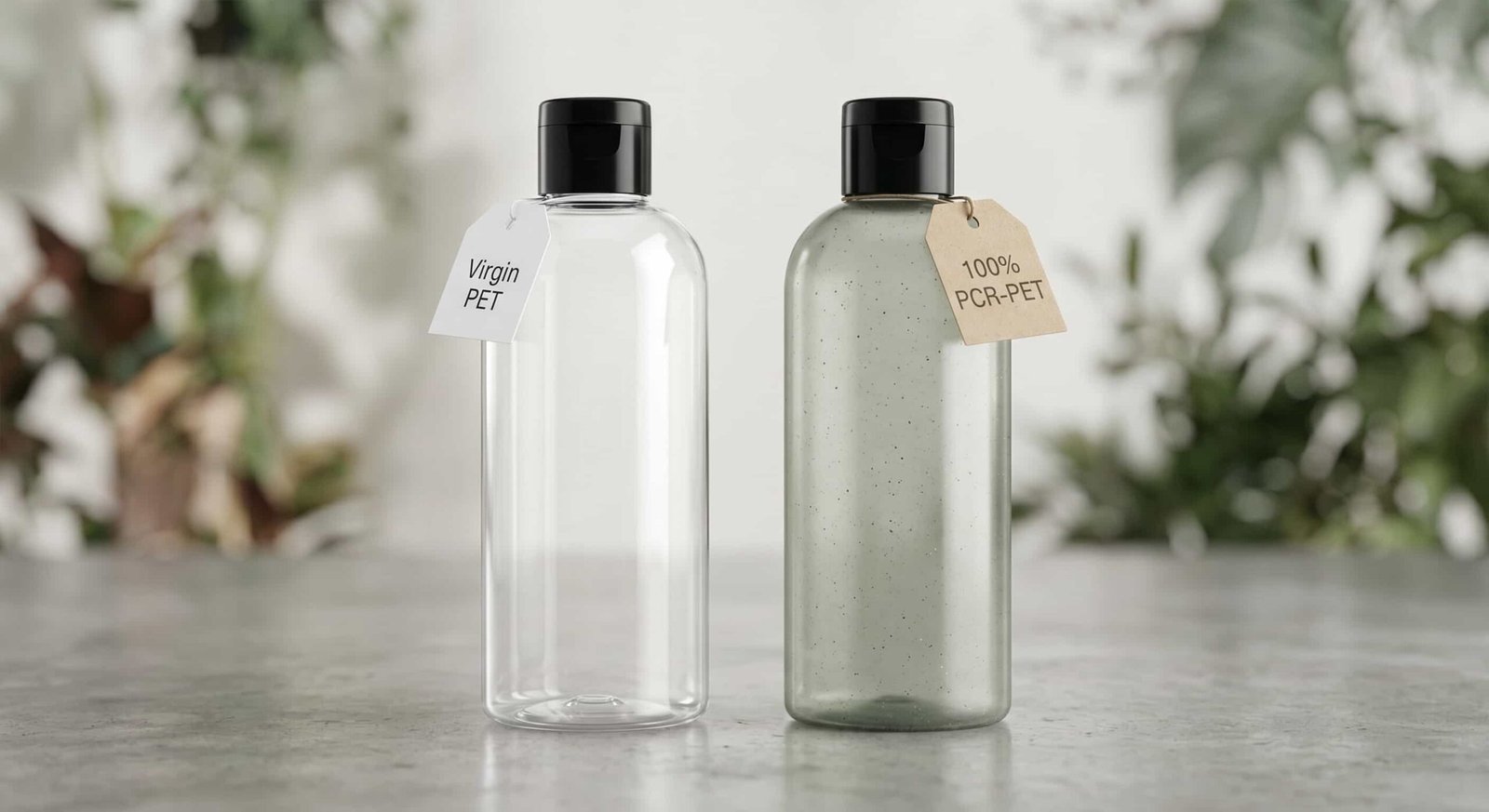
Virgin plastic is flawlessly clear or pure white. PCR plastic, however, has a history. Because it comes from recycled sources, PCR resins can carry a slight yellowish, greyish, or greenish tint, and you might notice tiny black dots or “speckles” in the material.
- Work with the tint: Choose darker custom colors (amber, forest green, matte black) or frosted finishes to mask PCR imperfections.
- Embrace the look: Many clean-beauty brands use transparent PCR with visible speckles as a visual badge of honor to prove to consumers that the packaging is genuinely recycled.
3. Verify Material Compatibility and Safety
Cosmetic formulations—especially those containing essential oils, active ingredients, or high alcohol content—can react with packaging materials.
- Ensure your supplier provides food-grade PCR or cosmetic-grade resins.
- Always request samples to perform compatibility tests (stability testing at high temperatures) to ensure the PCR material does not crack, warp, or degrade when in contact with your formulation.
4. Demand Supplier Certifications (Crucial for B2B)
Greenwashing is a major risk in the packaging industry. If your supplier cannot prove where their PCR came from, your brand could face legal and reputational damage. Reliable sustainable packaging manufacturers should provide:
- GRS (Global Recycled Standard) Certification: Proves the traceability of the recycled material.
- FDA or EU Food-Grade Approvals: Ensures the safety of the material for topical product contact.
PCR vs. Other Eco-Friendly Packaging: Quick Comparison
How does PCR stack up against other sustainable packaging trends? Here is a quick reference table:
| Packaging Type | Pros | Cons | Best Used For |
| PCR (Post-Consumer Recycled) | High consumer recognition; fits existing recycling streams. | Slight color tint; requires strict source tracing. | Lotion pumps, shampoo bottles, jars, tubes. |
| Biodegradable / PLA | Breaks down naturally in specific conditions. | Shorter shelf life; cannot handle high-moisture formulas. | Outer boxes, dry product containers. |
| Refillable Systems | Lowest long-term environmental impact; drives repeat purchases. | Higher initial tooling/mold cost for the brand. | Deodorant sticks, premium cream jars, luxury lipsticks. |
Frequently Asked Questions (FAQ)
Can PCR packaging be recycled again?
Yes! PCR materials like PCR-PET and PCR-PP can be placed right back into standard recycling bins by the end consumer, contributing to a truly circular economy.
Is PCR packaging more expensive than virgin plastic?
Generally, high-quality PCR carries a 10% to 20% price premium over virgin plastic due to the complex collection, sorting, and cleaning processes required to make it safe for cosmetics. However, this cost is easily offset by the premium pricing eco-conscious consumers are willing to pay.
Does PCR affect the functionality of cosmetic pumps?
If sourced from a professional manufacturer, no. The structural parts can utilize PCR perfectly, while critical mechanical parts are kept as virgin plastic or highly controlled PCR blends to guarantee smooth dispensing.
Ready to Transition to Eco-Friendly Cosmetic Packaging?
Switching to PCR is a powerful step toward future-proofing your beauty brand. The secret to a smooth transition is partnering with an experienced manufacturing partner who understands both the limits and the strengths of sustainable resins.
Want to see the quality for yourself?
Contact our team today to request a PCR Sample Kit and explore our wide range of customizable eco-friendly bottles, jars, and dispensing pumps.