The global personal care market is experiencing a massive shift. Driven by clean beauty trends and shifting consumer habits, solid formulations—ranging from natural deodorants and anti-chafe balms to solid sunscreens and stick perfumes—are skyrocketing in popularity.
For product managers and sourcing professionals, selecting the right deodorant stick container is no longer just about choosing a shape. It requires balancing formula compatibility, aesthetic luxury, and increasingly strict international environmental regulations.
If you are evaluating packaging options for your upcoming product launch, this guide breaks down the critical factors you must consider.
1. Material Selection: Prioritizing Circularity and Compliance
In 2026, material selection is heavily influenced by global sustainability mandates, such as the EU Packaging and Packaging Waste Regulation (PPWR). Traditional deodorant tubes often used multiple bonded plastics or metal components, making them impossible to recycle.
When choosing your container, look for these advanced options:
- All-PP Mono-Material: Packaging made entirely from a single material family (Polypropylene) can be dropped directly into consumer recycling bins without disassembly. If your brand is currently auditing its supply chain for eco-compliance, exploring our full breakdown of sustainable cosmetic packaging solutions can help you future-proof your product lines.It is highly resistant to essential oils and chemicals.
- PCR (Post-Consumer Recycled) Plastics: Brands looking to reduce their carbon footprint should opt for containers that blend virgin plastic with 30% to 100% PCR-PP. Ensure your factory partner can provide proper material traceability certificates.
2. Capacity and Sizing: Matching Consumer Habits
Deodorant containers generally fall into three capacity categories, depending on your target audience and application:
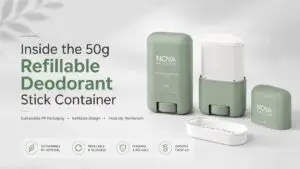
- Full-Size (50g – 75g): The industry standard for daily-use retail deodorants.
- Mid-Size (30g – 40g): Ideal for facial skincare sticks, target sunscreen applicators, or premium body balms.
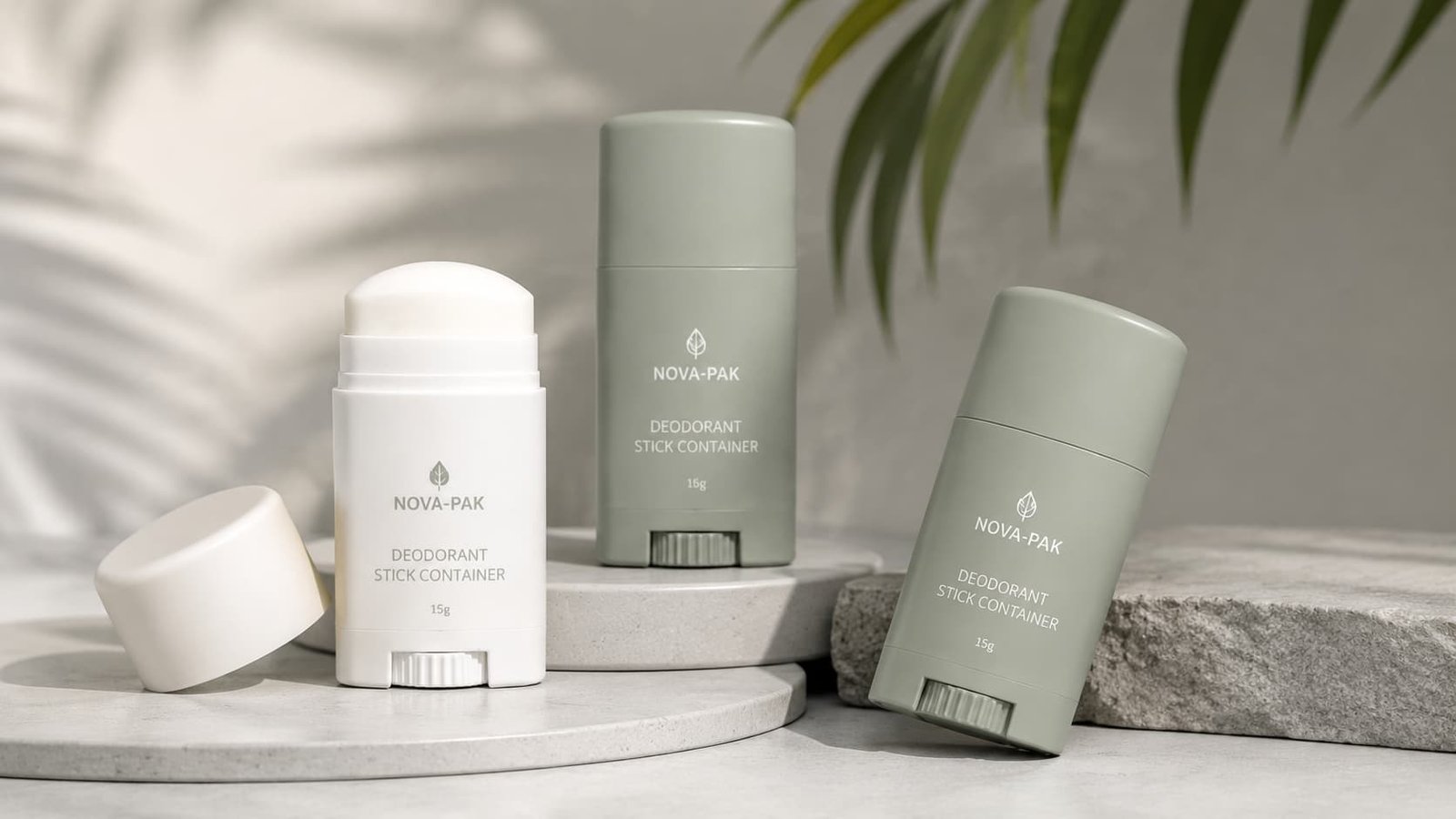
- Travel/Minis (15g – 20g): A booming sector driven by the on-the-go lifestyle. This size is perfect for pocket-sized solid perfumes, anti-friction balms, or travel-size deodorant lines.For instance, our popular customized 15g/16g PP Deodorant Stick Packaging is engineered specifically to meet this growing compact retail trend.
3. The Mechanism: Ensuring a Premium Sensorial Experience
The structural design of the tube dictates how the consumer interacts with your product. A flawless mechanism directly impacts perceived brand luxury.
- Bottom Propel-Repel Screw: The most popular and reliable mechanism. The user twists a dial at the base to smoothly drive the product up and down. Precision engineering here is key; the movement should feel weighted and controlled, not loose or jerky.
- Push-Up Design: Common in cardboard or minimalist plastic structures, where the user physically pushes the base upward. While eco-friendly, it offers less control over product dispensing compared to a twist screw.
- Airtight Snap Closure: Solid formulas often contain volatile fragrances or moisture. The cap must create a secure, airtight seal upon closure to prevent the formula from shrinking or losing its scent on retail shelves.
4. Customization and Brand Aesthetics
Your packaging is your silent salesman on social media and retail shelves. When sourcing from a direct factory alternative rather than a standard wholesale distributor, ensure they offer advanced decoration capabilities:
- Custom Color Injection: Matching your precise brand Pantone colors.
- Surface Finishes: Matte coatings give a modern, clinical touch, while high-gloss finishes exude classic luxury.
- Printing Techniques: High-precision silk-screen printing or hot-stamping to ensure logos do not scratch or fade over time.
Conclusion: Partner with a Direct Factory Expert
Choosing the right packaging requires strict technical evaluation. Bypassing middleman distributors and working directly with a certified manufacturer allows you to customize mechanisms, secure PCR material data, and significantly protect your profit margins.